
Is Your Child Protected?
What to Look for in Schools, Camps, Events, and Travel Programs
You’ve checked the schedule, met the staff, and read the reviews.
But there’s one question most parents don’t ask:
If something unexpected happened, would anyone be ready?
Most environments that serve children are built with good intentions. They’re designed to be welcoming, engaging, and enriching.
But safety isn’t about intention. It’s about preparation. And preparation isn’t always visible from the outside.
Where Things Actually Break Down
Risk rarely shows up in the brochure or during a scheduled tour. It tends to surface in the in-between moments—when things are busiest, least structured, or simply assumed to be under control.
Think about:
- Drop-off and pick-up, when everyone is coming and going
- Large events, where “open and welcoming” can mean loosely controlled
- Field trips and travel days, where routines change
- Busy transitions, when staff attention is divided
These are the moments when structure matters most and where gaps are most likely to appear.
A Quick Gut Check for Parents
You don’t need a background in security to get a sense of whether an environment is well-managed. A few simple observations can tell you a lot. If you can’t easily answer these questions, it’s worth taking a closer look.
Access
Visibility
Accountability
Response
The Environments That Deserve a Second Look
Every setting has its own rhythm, but some naturally require more intentional planning behind the scenes. None of these environments are inherently unsafe. But they all rely on preparation, not just trust.

Summer Camps
With more movement, larger groups, and outdoor activities, supervision becomes more complex. Transitions and open spaces are where structure matters most.
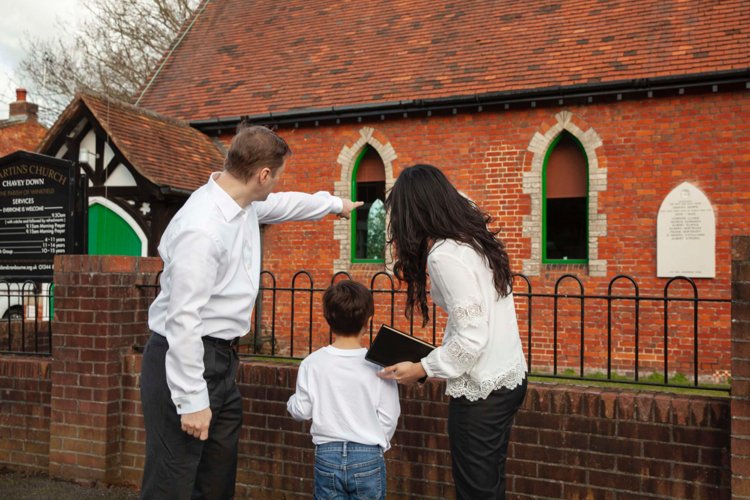
Places of Worship
These spaces are designed to be open and welcoming, which is part of their value. During high-attendance services and holidays, that openness requires thoughtful security planning to maintain both accessibility and awareness.

Private Schools & Programs
Familiarity creates comfort, but it can also lead to assumptions about who belongs and who doesn’t. Strong systems help remove that ambiguity.
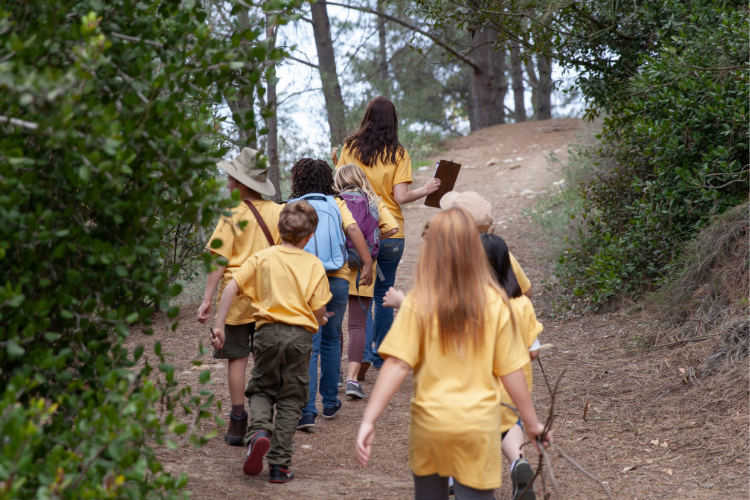
Travel & Field Trips
New environments, changing routines, and less control over surroundings introduce variables that need to be managed carefully.

For High-Visibility Families
If your role, business, or public presence puts you in the spotlight, your family may attract more attention than you realize.
There are situations where additional protection may be worth considering:
- Large public gatherings or religious holidays
- Travel to unfamiliar locations
- Events where routines are predictable or widely visible
Most families don’t think about this until they need it. Planning ahead creates options.
What Trained Security Actually Looks Like Around Children: Schools, Camps, and Other Events
Not all security guards are the same and around children, that difference matters more than most people realize.
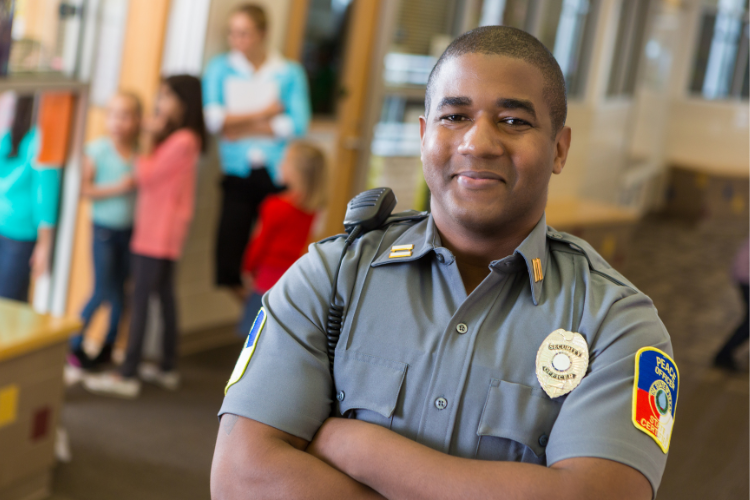
Upon request, Defender One security guards assigned to schools complete NASRO (National Association of School Resource Officers) training, the same curriculum used to prepare sworn school resource officers. That means our personnel understand more than access control. They understand school culture, adolescent behavior, de-escalation, and how to serve as a calm, trusted presence in a learning environment—not just a uniform at the door.
That same foundation carries into other schools, summer camps, youth programs, and community events. Whether the setting is a school hallway or an outdoor activity with 200 campers, guards who understand how to work around children bring a level of judgment and awareness that general security training simply doesn’t develop.
It’s a standard most security companies don’t meet. For any organization that serves children and wants guards who genuinely fit the environment they’re protecting, that distinction is worth asking about.


The Conversations Most People Aren’t Having
Most organizations that serve children care deeply about what they do. But not all of them are equally prepared.
And unless someone asks the question, nothing changes.
Even in well-run environments, security isn’t everywhere at all times. That’s where awareness matters most.
It’s easy to assume that someone is always watching, that systems are in place, or that “they would have thought of that.” But in reality, many environments rely on routines, familiarity, and trust more than clearly defined processes.
That doesn’t make them unsafe—but it does mean there can be gaps, especially during busy or unstructured moments.
As a parent, or even as someone connected to an organization, you don’t need to overanalyze every detail. But you should feel confident in how things are being managed. And if something feels unclear, it’s worth asking.
Because the strongest environments aren’t just well-intentioned—they’re prepared, consistent, and able to explain how they operate.
The Questions You Need to Ask
- Who is responsible for monitoring the environment throughout the day?
- How is access managed during busy times like drop-off, pick-up, or events?
- How are visitors identified and tracked while they’re onsite?
- How are children accounted for during transitions or group changes?
- What happens if something unexpected occurs?
- How are parents or guardians notified if there’s an issue?
- What changes during large events, field trips, or high-attendance days?
You don’t need perfect answers, but you should get clear ones.
When It’s Time to Take a Closer Look
For many organizations, these questions are easy to answer. Systems are clearly defined, responsibilities are understood, and the environment is consistently managed—even during busy or unstructured moments.
But that’s not always the case.
In some environments, processes have developed over time without being formally reviewed. Responsibilities may be shared, assumed, or handled differently depending on the situation. None of this means an organization is unsafe, but it can create gaps that aren’t immediately visible from the inside.
That’s usually when it makes sense to take a closer look.
A Practical Next Step – Free Security Assessment for Your Program
If you’re responsible for a school, camp, youth-serving organization, or place of worship, the most useful thing you can do right now is get a clear picture of where you stand.
Defender One offers complimentary security assessments for organizations that serve children and communities. This is an opportunity to have an experienced professional walk your site, ask the right questions, and give you an honest, practical read on what’s working and where there may be gaps.
A typical assessment includes:
- Reviewing how access points are managed throughout the day
- Observing movement during transitions and high-traffic periods
- Identifying areas where visibility or accountability may be limited
- Recommending practical adjustments that support staff and leadership
There’s no obligation and no pressure to move forward. For many organizations, the assessment alone is enough to prompt meaningful improvements. For others, it’s the start of a bigger conversation.
Are you a parent or community member? You don’t have to be the decision-maker to make a difference. If a school, camp, congregation, or program comes to mind, you can nominate it for a free assessment. We’ll reach out directly to coordinate—no action required on your part beyond the introduction.

A Final Thought
The goal isn’t to create fear or second-guess every decision. It’s to be intentional about the environments we trust with our children.
The strongest organizations aren’t just welcoming and well-run. They are prepared, consistent, and confident in how they operate, especially when it matters most.
If this made you think of a school, camp, or organization, it may be worth starting a conversation. In many cases, that’s all it takes to make a meaningful improvement.
Have a Question About Security?
If something doesn’t feel clear—or you’re not sure if a procedure is the right fit—it’s worth asking. We’re always available to talk through a situation, answer questions, or provide guidance.
And if this brought a school, camp, or organization to mind, feel free to pass it along or make an introduction.
Additional Resources from Defender One

An Overview of Armed Security Solutions
Armed security services provide highly trained officers equipped to protect people, property, and high-value assets in high-risk environments. From financial institutions and healthcare facilities to critical infrastructure and major events, armed guards deliver deterrence, rapid response, and professional presence. This guide explains when to consider armed security, the training and certifications required, and how to choose the right provider for your needs.
Schools Need Security Drills Beyond Fire Alarms
Fire drills are a long-standing tradition in schools, ensuring students know how to evacuate safely. However, schools need security drills beyond fire alarms to address modern threats effectively. Schools face risks that range from active threats to medical crises and...

Protecting Executives from Cyber and Physical Threats
A CEO’s influence extends far beyond boardrooms. Their decisions move markets, their visibility invites scrutiny, and their digital footprint exposes vulnerabilities. From cybercriminals seeking financial gain to physical threats like stalking, executives are prime...